
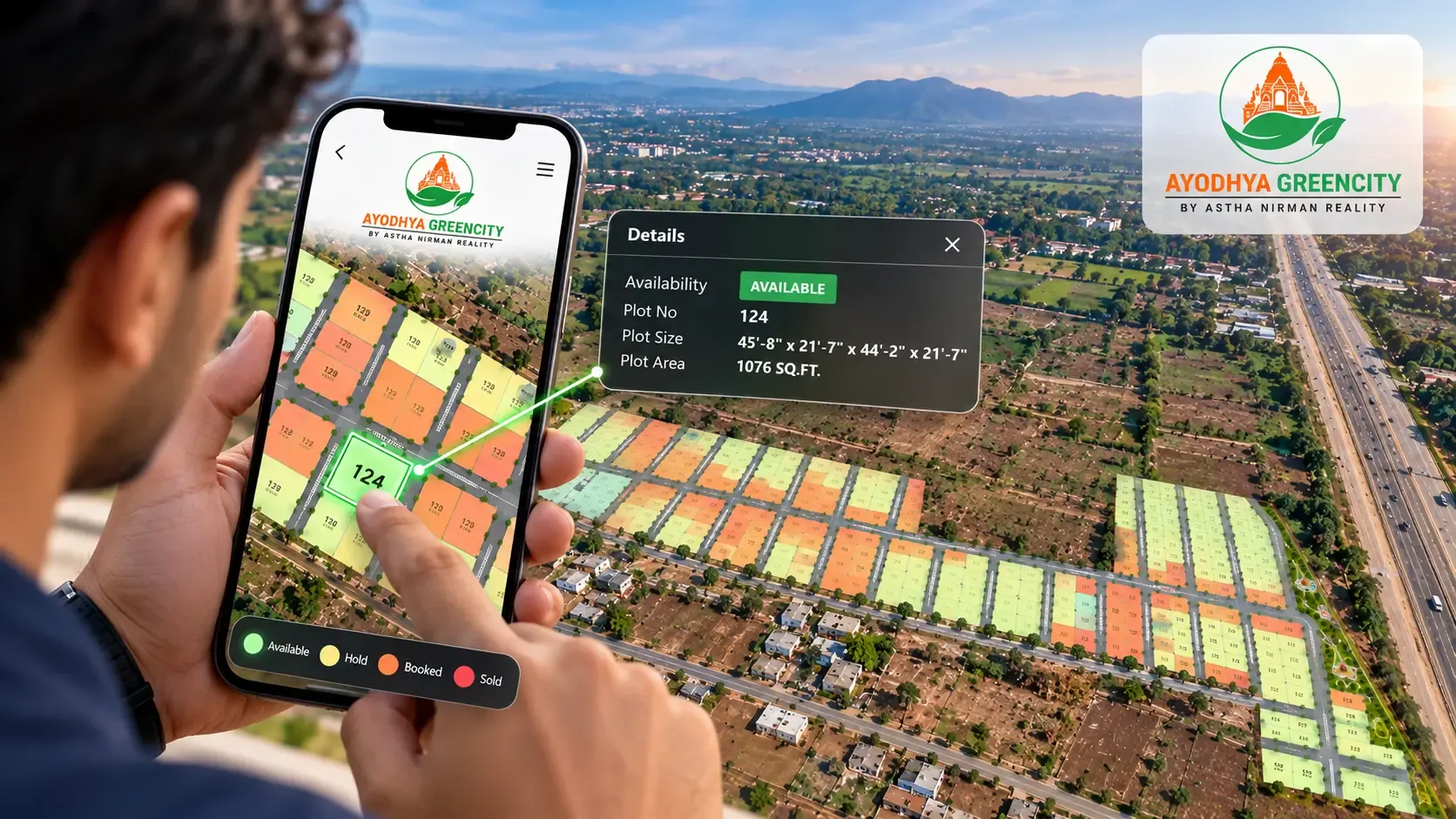
An investor in Pune likes your plotted project near Vadodara. Before paying a token, he wants to see the layout, check which plots are still open and understand the area. Today, that often means three site visits, a dozen phone calls and a PDF brochure that is already out of date.
Selling plots online in India does not mean the buyer never visits your site. It means the buyer shortlists, compares and almost decides online, so the one site visit ends in a booking instead of more questions. To do that, you need three things online: a clear layout, live plot availability and enough location proof for a buyer to trust what they see.
This guide shows land developers how to set that up in seven practical steps, with a real-world example and the mistakes to avoid.
Key takeaways
- Selling plots online is about making the site visit count, not replacing it.
- Buyers want three answers before they travel: which plots are open, what the location is like and whether the project is approved.
- A clickable plot layout with live status answers the first question better than any brochure.
- Put your project where buyers already look — your website, WhatsApp, portals and QR codes on hoardings.
- Every online enquiry needs a fast reply. Interest drops quickly when follow-up is slow.
Why plot buyers want to shortlist online first
Plotted projects attract a wide mix of buyers. Many of them cannot easily visit your site more than once.
Investors from other cities. A plot near Ahmedabad or Nashik is often bought by someone living in Mumbai, Pune or Bengaluru. Every visit means a day off work and travel costs.
NRI buyers. Families in the Gulf, the UK or the US buy plots as long-term assets or for a future home. They rely on relatives, brokers and whatever they can see online.
Local buyers who are short on time. Even buyers who live nearby prefer to shortlist two or three plots before giving up a weekend.
All of them share one worry: is the plot they like still available? Buyers have learnt that brochures and broker lists are often old. If they cannot check availability themselves, they keep asking — or move to a project that makes it easier.
7 steps to sell plots online in India
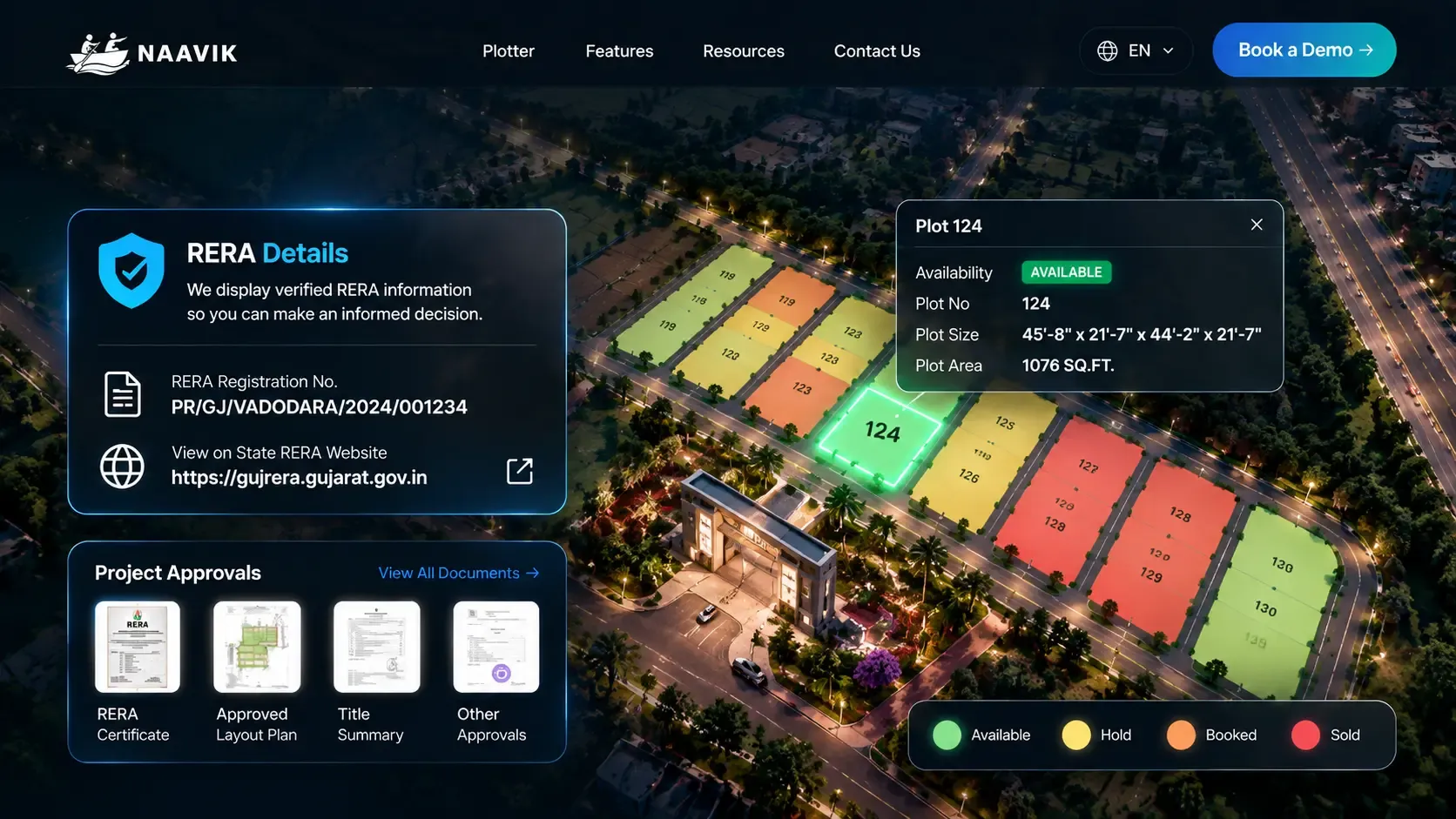
1. Keep your RERA details and approvals ready to show
Trust comes before interest. Under the RERA Act, a project that needs registration cannot be advertised or sold before it is registered. Every advertisement must also show the RERA registration number and the state RERA website address.
Put these details on every online listing, landing page and social post. Keep scanned approvals, the approved layout and title summary ready to share when a serious buyer asks. Online buyers check this early, and missing details end the conversation.
2. Turn your static layout into a clickable plot map
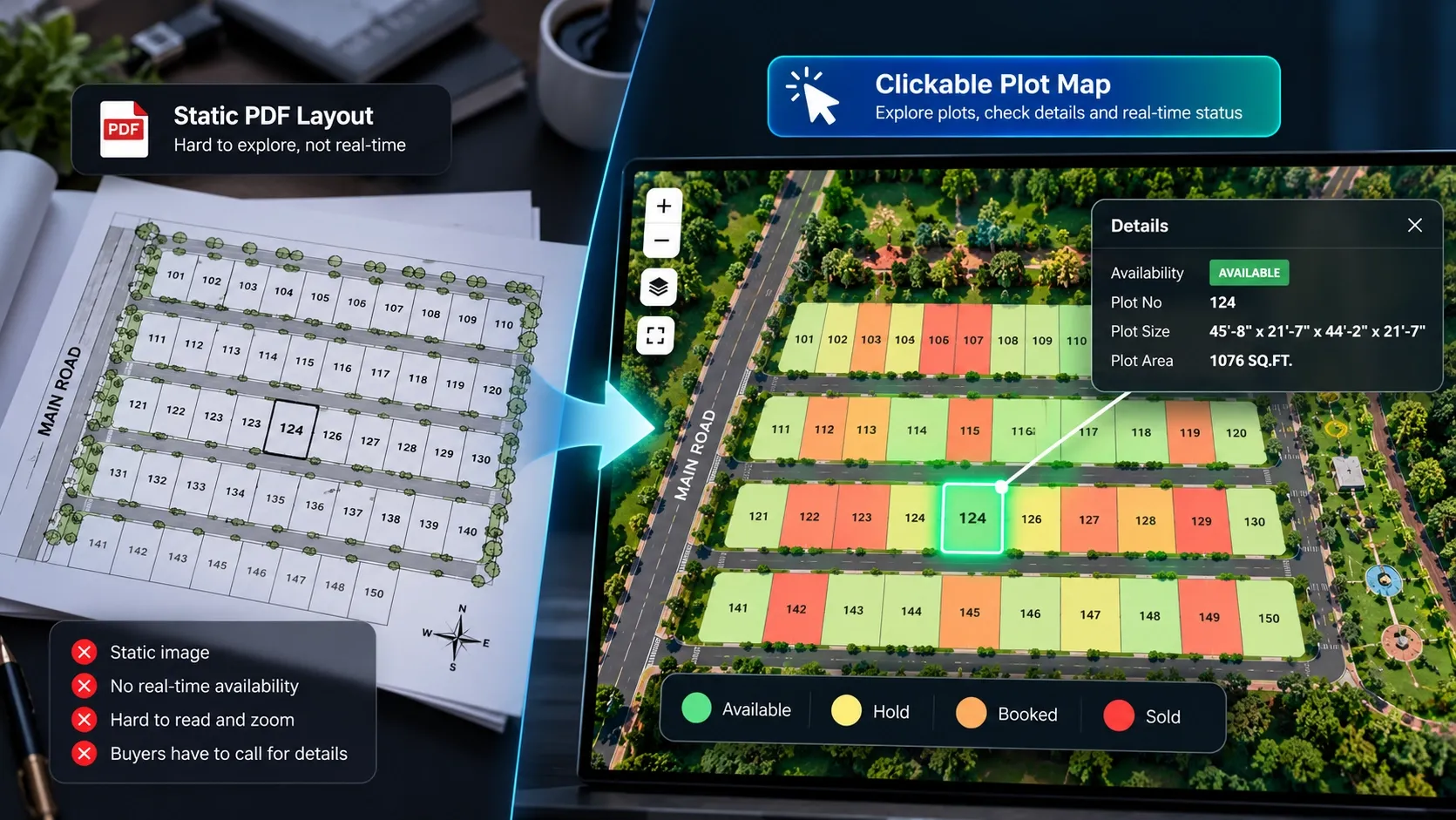
A PDF layout tells buyers what the project looked like on the day it was printed. A buyer has to zoom, squint and then call you to ask about each plot.
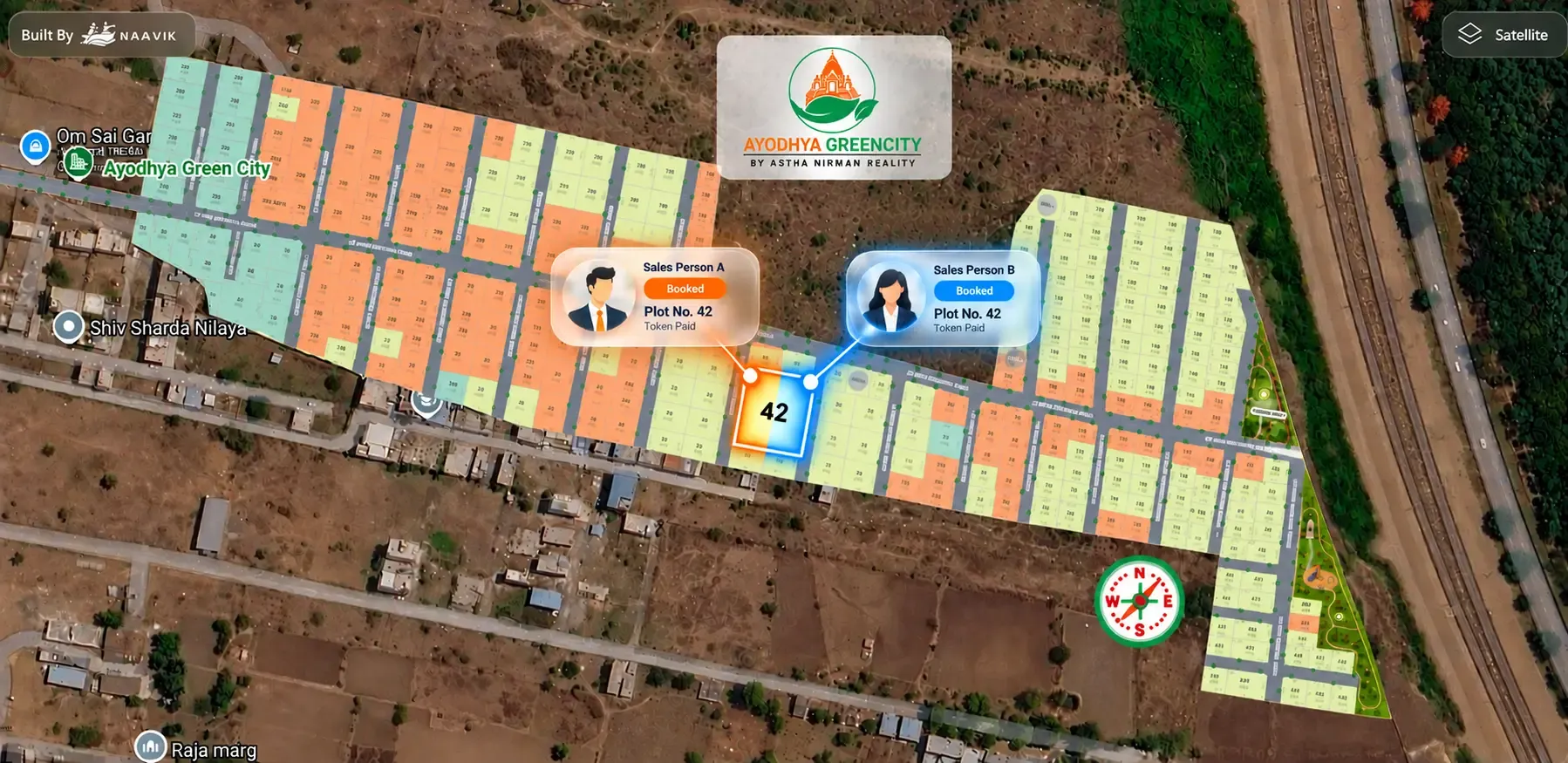
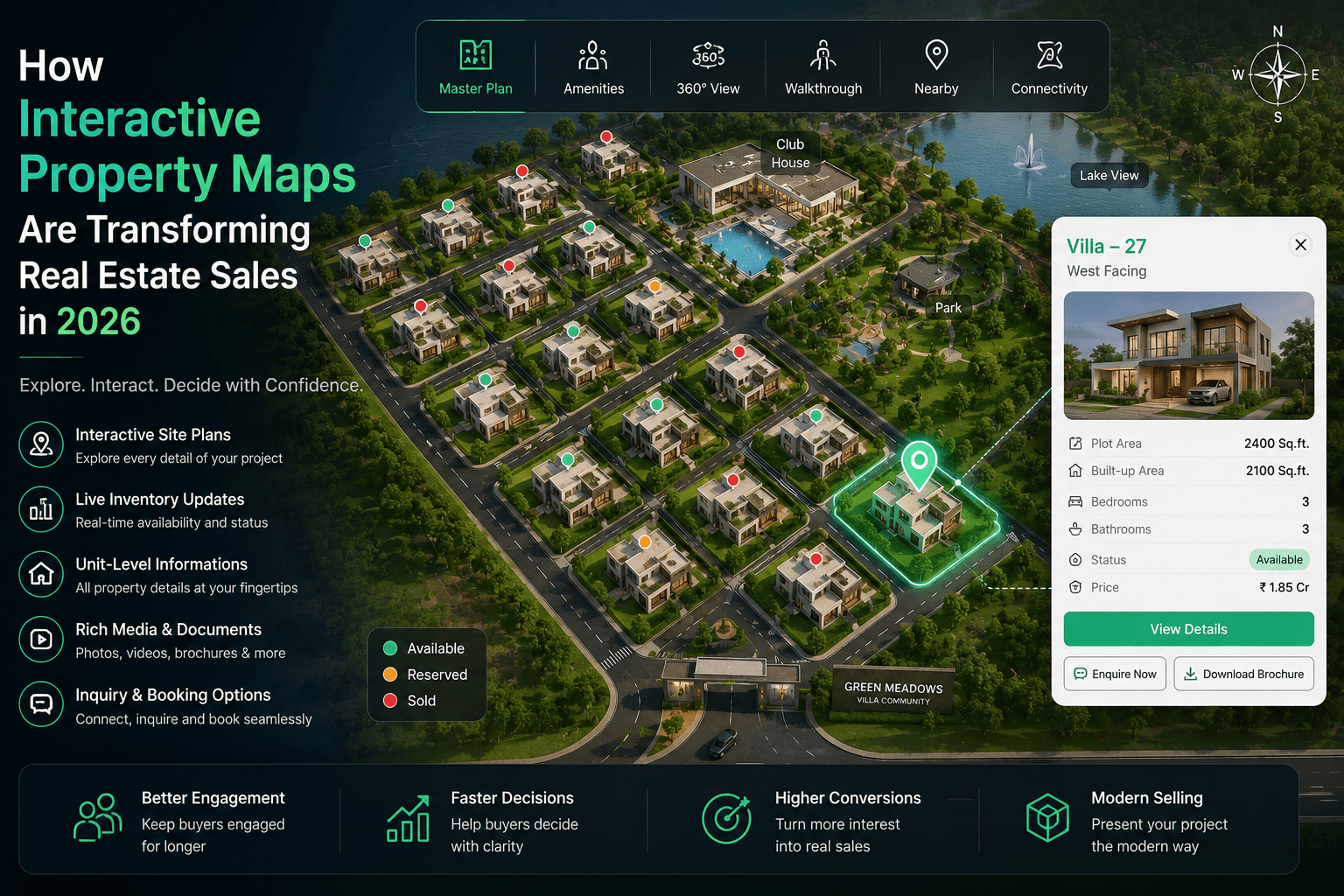
A clickable layout works differently. The buyer taps a plot and sees its size, facing and current status. They can compare corner plots, garden-facing plots and plots near the entrance without calling anyone.
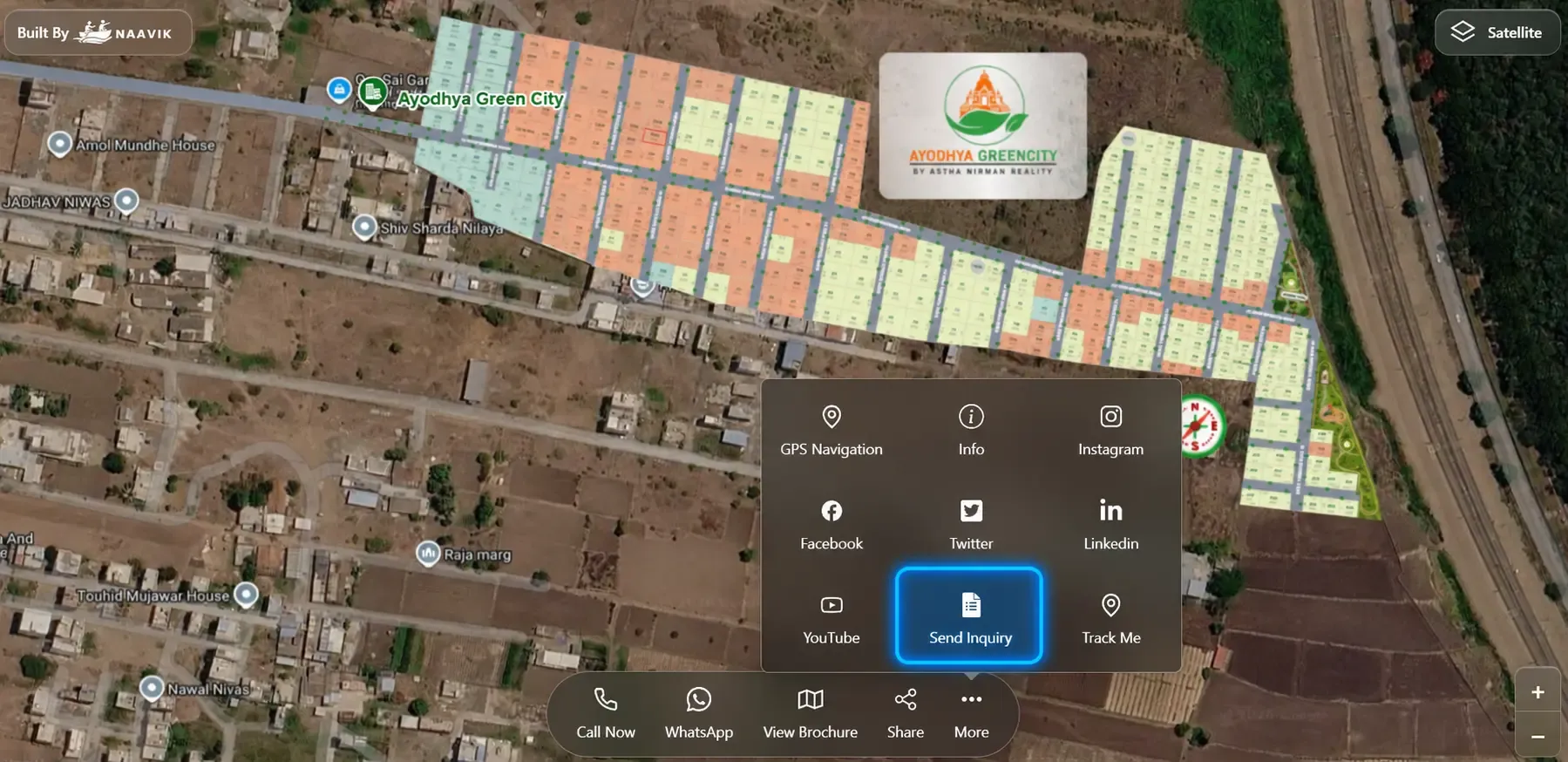
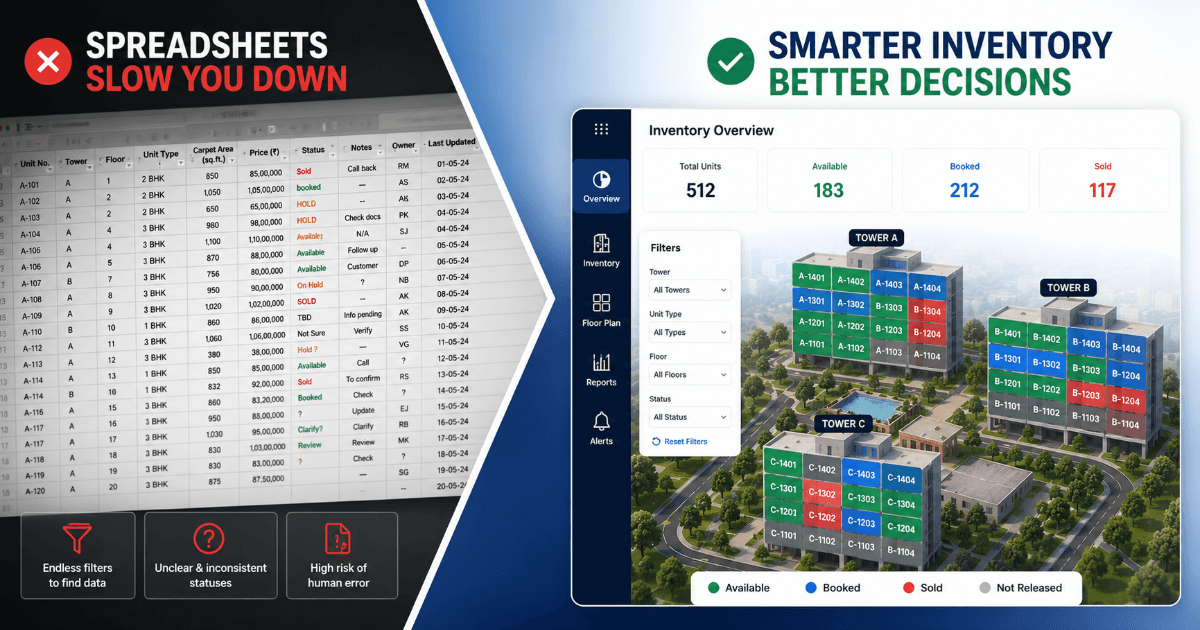
This is the core of selling plots online. If you want to see how the format works, look at interactive plot layouts on map. We have also compared the two formats in detail in interactive property maps vs traditional brochures.
3. Show live availability with four clear statuses
Availability is the question every buyer asks first. Answer it before they ask.
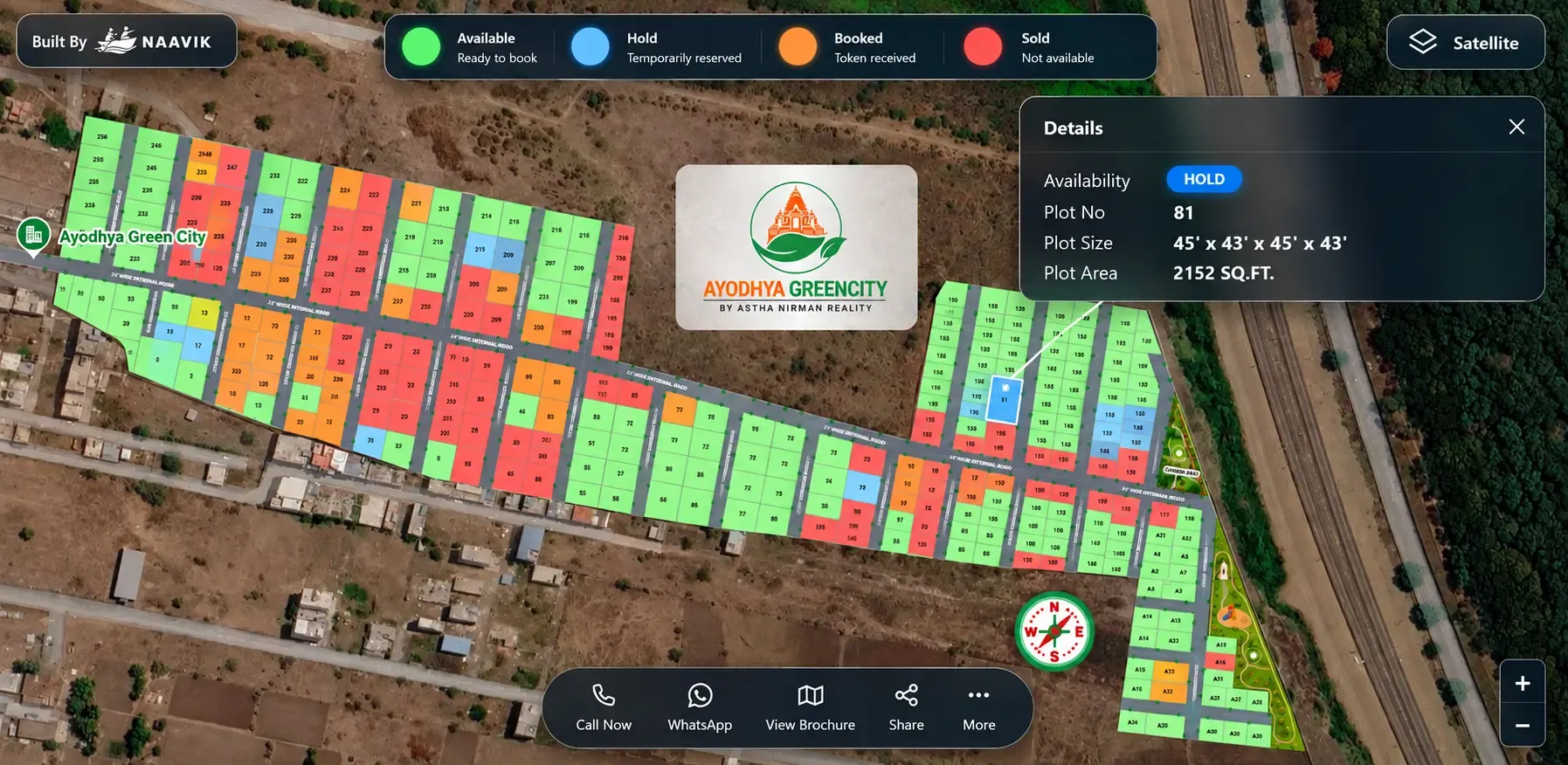
Use four statuses only — available, booked, hold and sold — and colour-code them on your layout. Update status the moment a token is taken, not at the end of the day.
This does two jobs. Buyers trust a layout that is clearly current. Your sales team and channel partners stop offering plots that are already gone. If your team has faced that problem, read our guide on how to prevent double booking of plots.
4. Help buyers judge the location without travelling
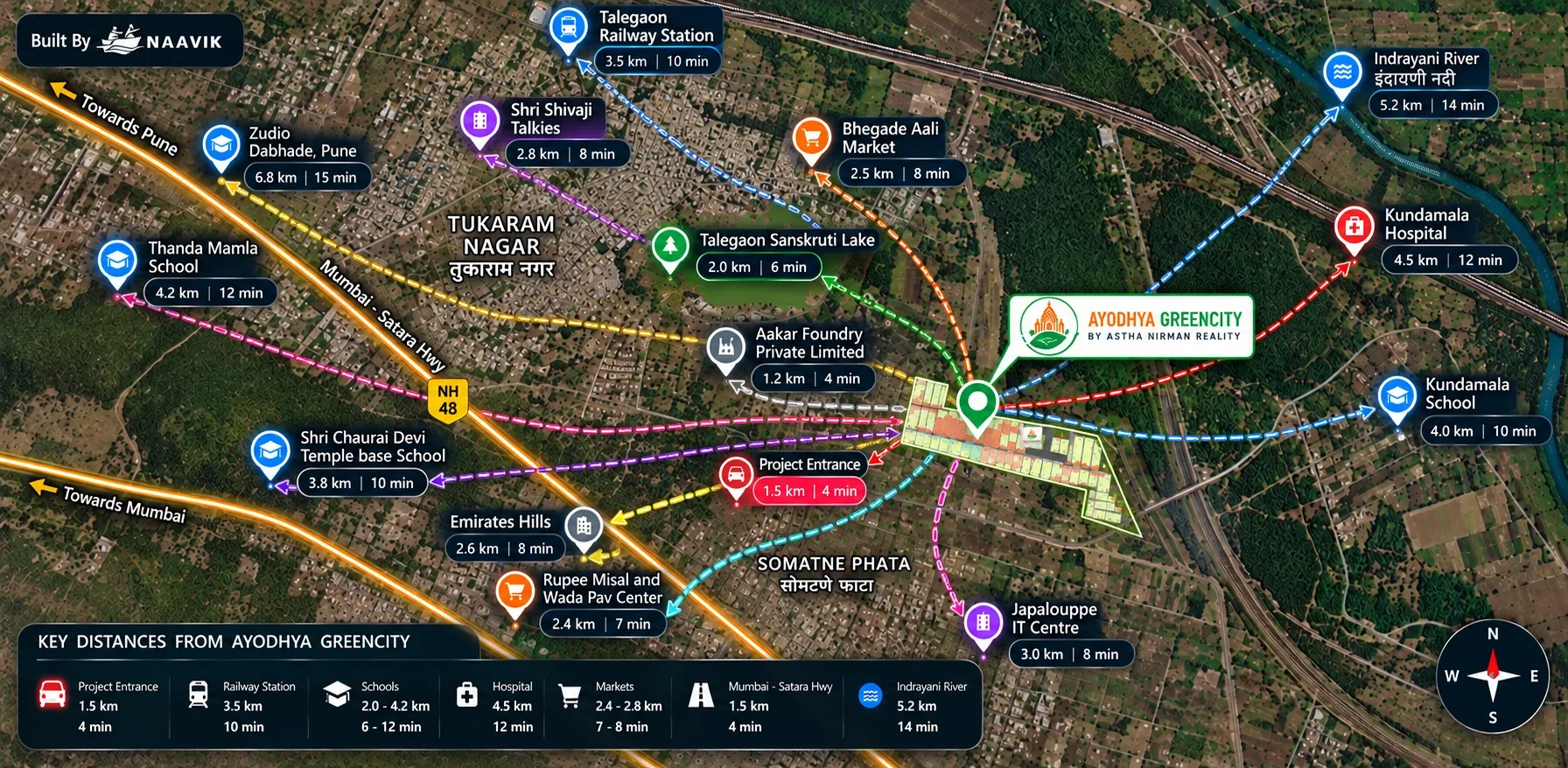
For plot buyers, location is the product. A remote buyer wants to know how far the project is from the highway, the nearest school, the hospital and the railway station.
Show this clearly:
- Nearby landmarks and distances — schools, hospitals, markets, highways and transport.
- Connectivity — upcoming roads, ring roads or industrial corridors that matter to buyers.
- Virtual site tour and 360° media — the entrance, internal roads, amenities and the view from key plots.
- Drone or site photos with dates, so buyers know they are recent.
A buyer who has already seen the approach road and the surroundings online arrives at your site with fewer doubts.
5. Put your project where buyers already look
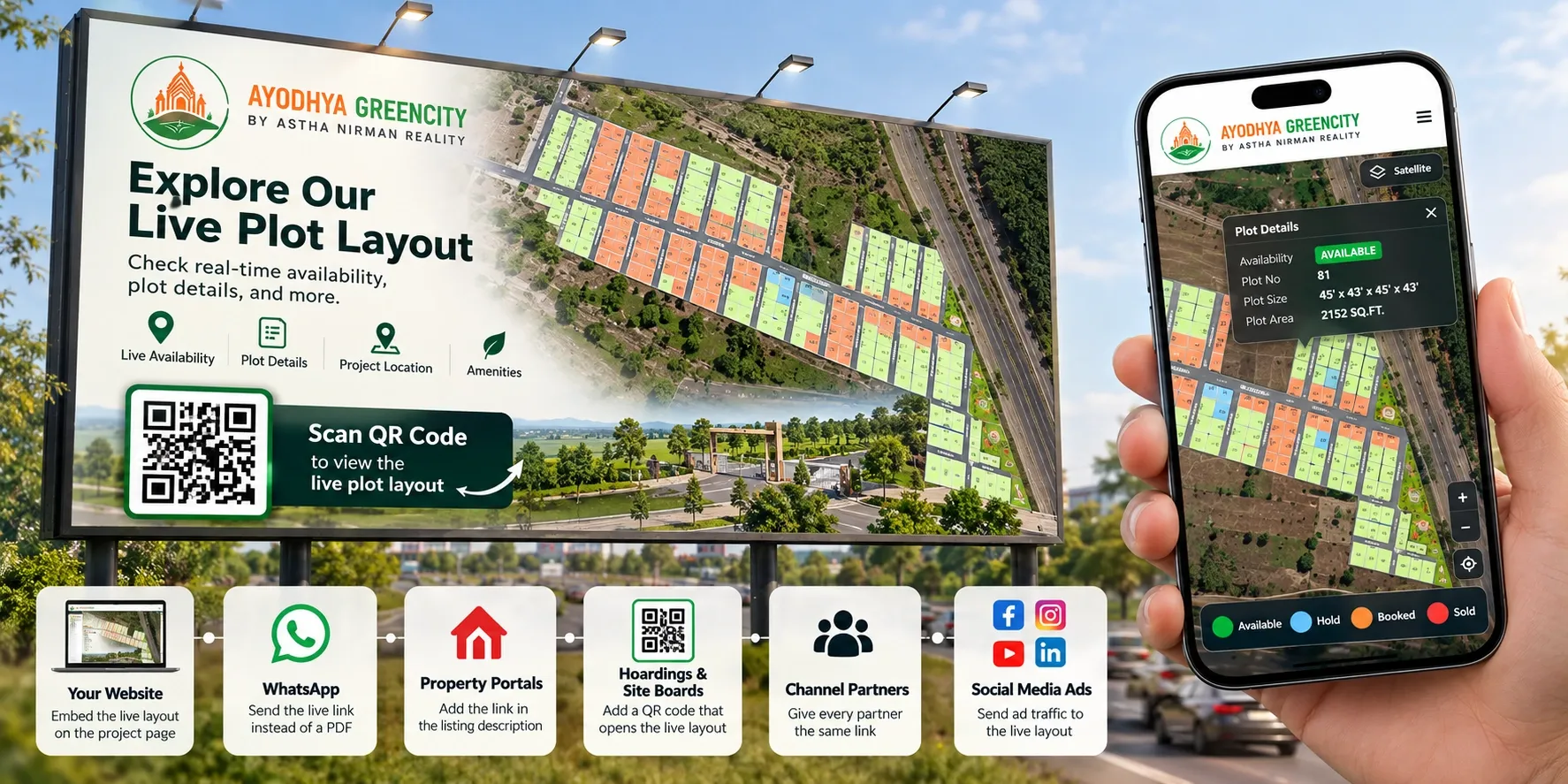
A good online layout is wasted if buyers cannot find it. Share the same live link everywhere instead of different files for different channels.
- Your website - Embed the live plot layout on the project page, not just a brochure download
- WhatsApp - Send the live link instead of a PDF, so it never goes out of date
- Property portals - Add the link in the listing description where the portal allows it
- Hoardings and site boards - Add a QR code that opens the live layout
- Channel partners - Give every partner the same link so they sell from current inventory
- Social media ads - Send ad traffic to the live layout, not a generic contact form
One link, updated in one place, keeps every channel accurate
6. Capture and follow up every enquiry in one place
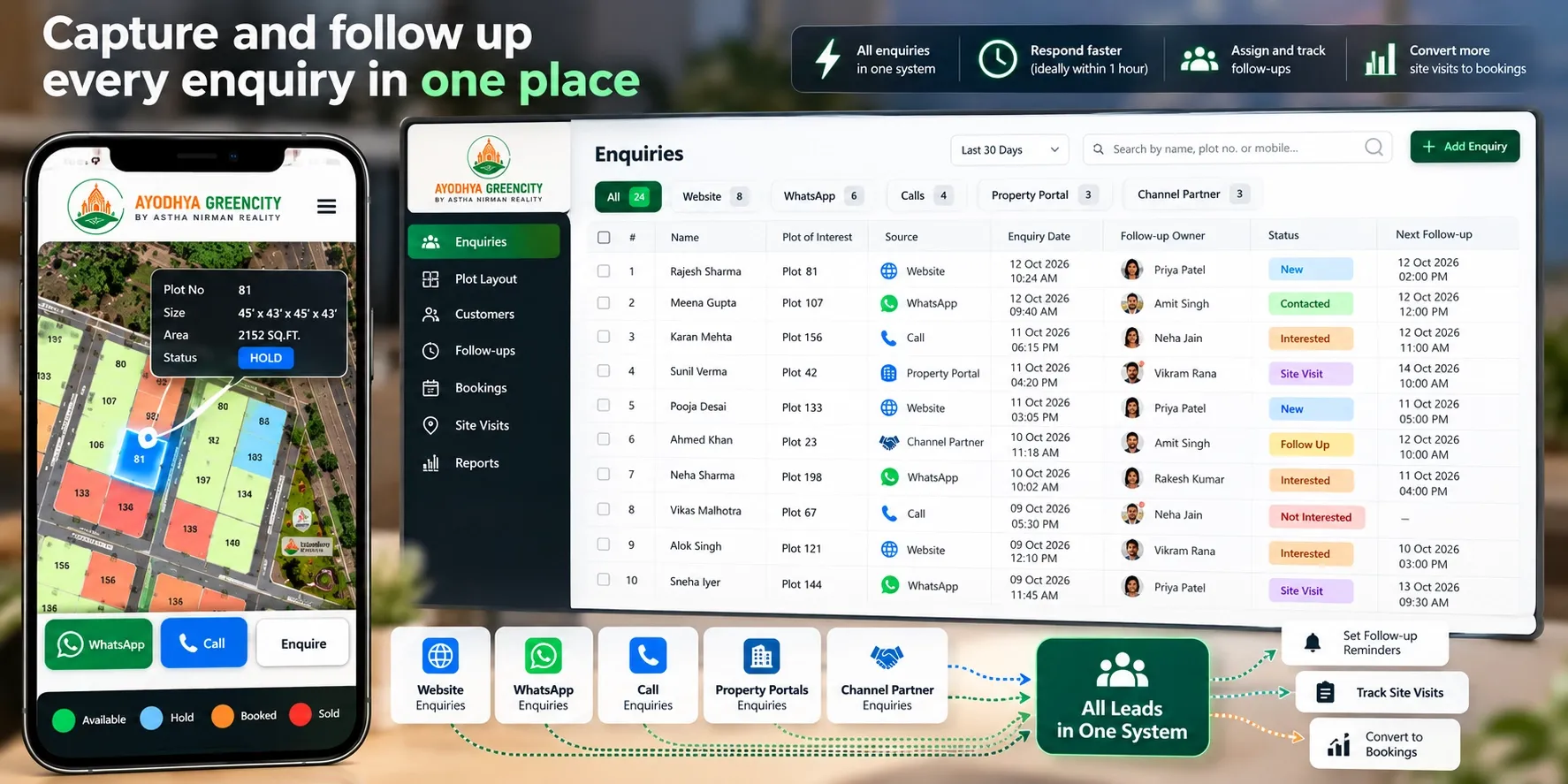
Online selling creates more enquiries from more places — the website, WhatsApp, calls and partners. When they land in different phones and inboxes, leads get missed.
Bring them into one system. Record which plot the buyer looked at, where the enquiry came from and who is following up. Reply the same day, ideally within the hour. A buyer who is looking at your layout tonight may be looking at another project tomorrow.
Make it easy to enquire. A WhatsApp or call button next to each plot gets more responses than a long form.
7. Make the one site visit count
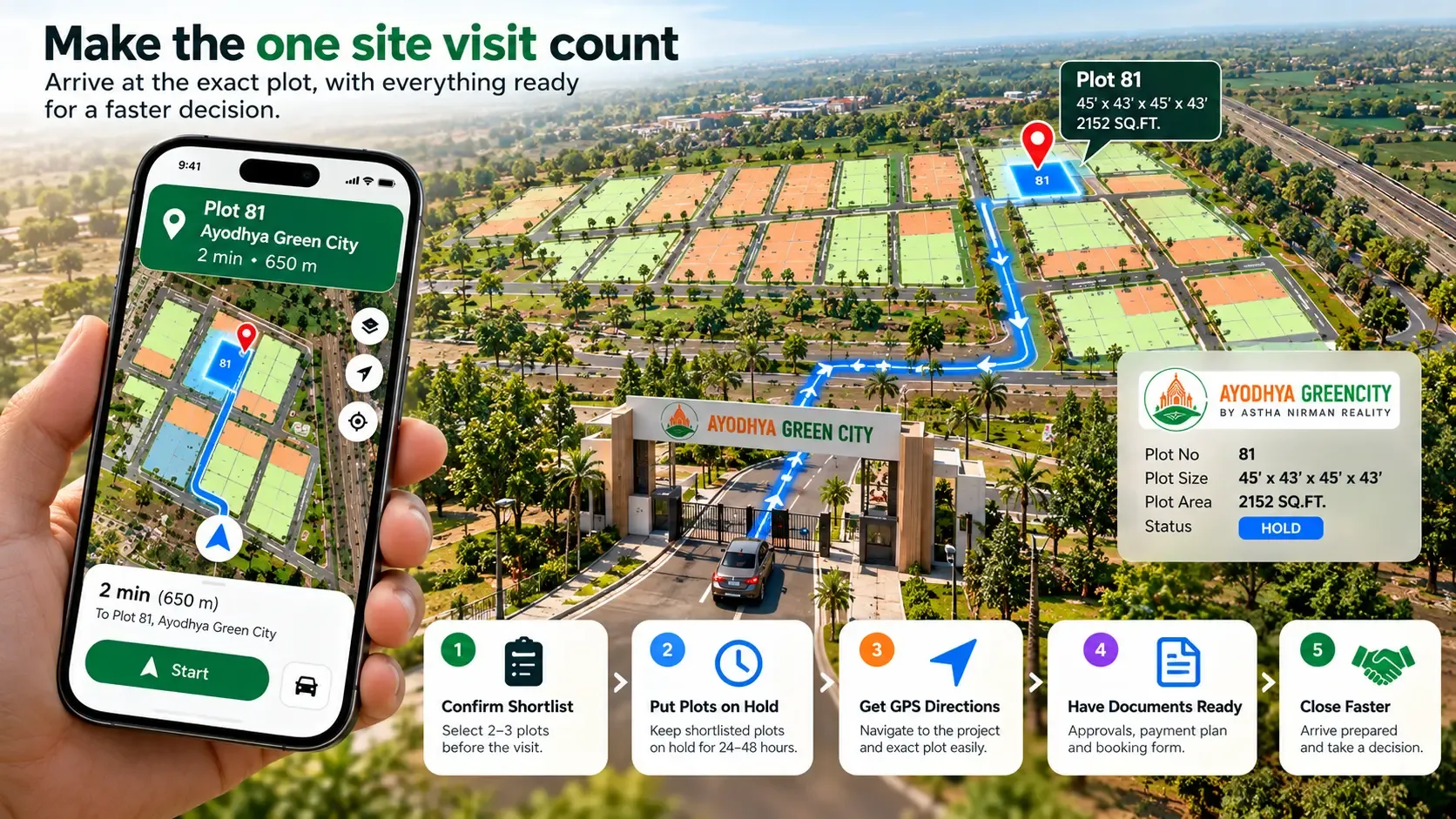
When a buyer is ready to visit, plan it so the visit ends with a decision.
- Confirm the shortlist before the visit — the two or three plots the buyer liked online.
- Put the shortlisted plots on hold for a fixed period, such as 24 to 48 hours, so they are not sold on the way.
- Share GPS navigation to the site and, where possible, to the exact plot. Buyers in a large layout often struggle to find plot boundaries.
- Have documents ready — approvals, the payment plan and the booking form.
The buyer arrives knowing what they want to see. Your sales team spends the visit closing, not explaining the layout from scratch.
Example: selling a 150-plot project to buyers who cannot visit often
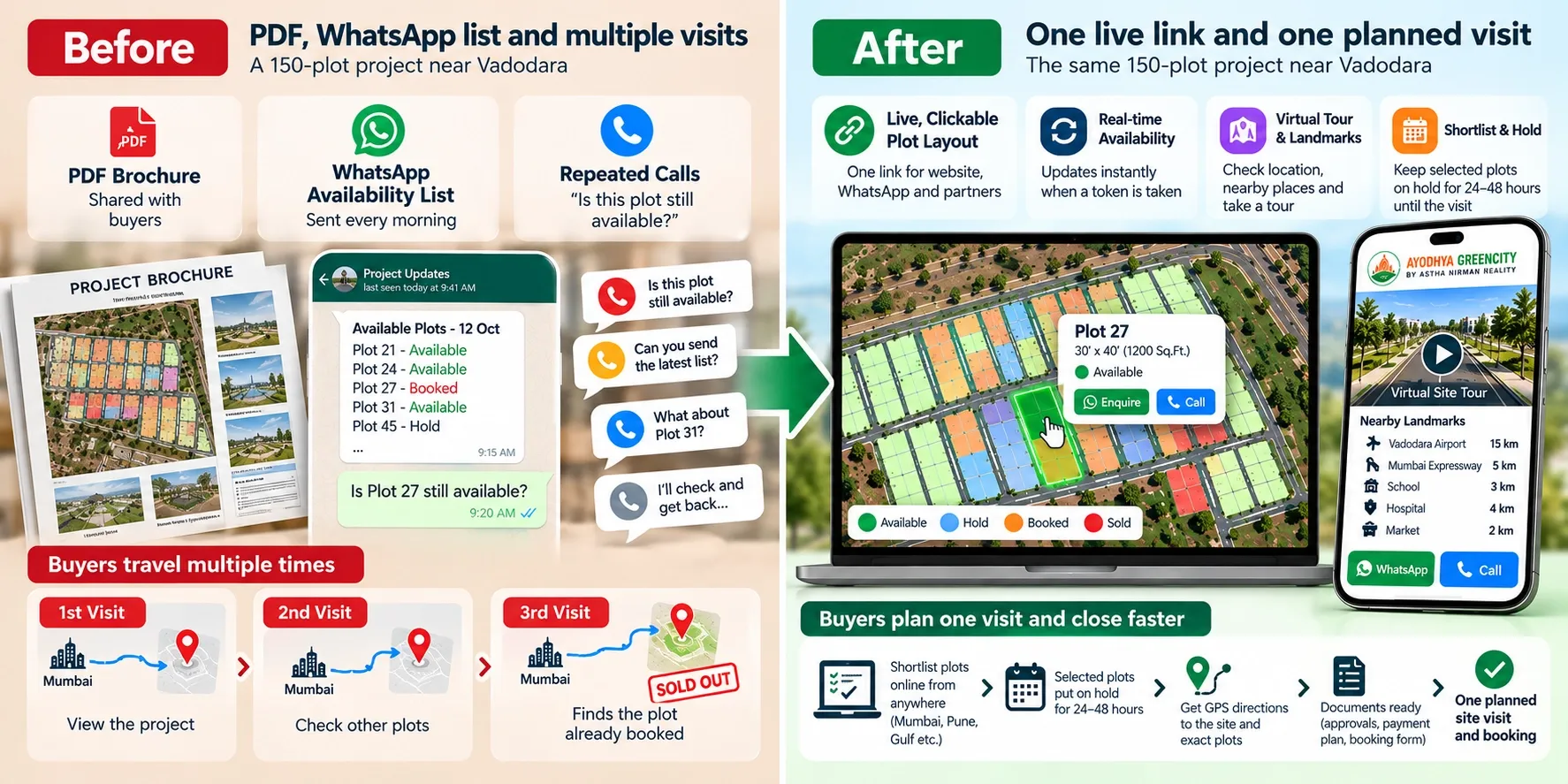
Consider a developer launching a 150-plot project near Vadodara. Many of the early enquiries come from buyers in Mumbai, Pune and the Gulf.
Before. The team shares a PDF brochure and a WhatsApp availability list each morning. Buyers call to ask about plots, then ask again a week later. Most buyers visit two or three times before deciding. Twice in the first month, a buyer travels to see a plot that was booked the day before.
After. The developer embeds a live, clickable layout on the project website and shares the same link with partners and on WhatsApp. Plot status updates the moment a token is taken. Buyers check landmarks, take the virtual tour and shortlist plots before calling.
The sales team now gets fewer "is this plot still available?" calls and more "I want to book Plot 27 or 31" calls. Site visits are planned around a shortlist, and the shortlisted plots are put on hold until the visit. Most serious buyers now visit once.
Common mistakes when selling plots online
1. Sharing a PDF brochure as the main asset
Why it hurts: The brochure becomes outdated as soon as plots are sold or reserved.
What to do instead: Share a live plot layout link that displays the latest availability status.
2. Hiding prices completely
Why it hurts: Serious buyers may skip projects when they cannot get an indication of the price.
What to do instead: Show a price range or starting price for each plot size.
3. Leaving out RERA details
Why it hurts: Buyers and channel partners may lose trust, and missing required disclosures can create compliance risks.
What to do instead: Display the applicable RERA registration number and official website wherever required.
4. Maintaining different availability lists for different partners
Why it hurts: The same plot may accidentally be offered to multiple buyers.
What to do instead: Maintain one live source of availability that sales teams and channel partners can access.
5. Responding slowly to online enquiries
Why it hurts: Potential buyers may lose interest and move on to another project.
What to do instead: Respond on the same day and manage enquiries through a centralized lead management system.
6. Using stock photos instead of real site media
Why it hurts: Buyers may become doubtful if the actual project looks different from the promotional images.
What to do instead: Use dated site photographs, drone images, and 360-degree media to provide a more realistic view of the project.
Where Plotter by Naavik.ai fits
The steps above need one thing at their centre: a live, shareable view of your project that buyers, sales teams and partners can all trust.
Plotter by Naavik.ai is plot management software that turns static layouts into interactive 3D site plans with real-time plot availability. Your layout sits over Google Maps, so buyers see each plot in its real location with nearby landmarks and connectivity. Every plot is clickable and colour-coded by status.
Enquiries come in through WhatsApp or call buttons and land in the built-in CRM, with the plot and source recorded. You can embed the layout on your website, share it by link or QR code, and give buyers GPS navigation to the site. The analytics dashboard shows visitor numbers, leads and bookings, so you know which channels bring serious buyers.
You can see this in action on Ayodhya Green City in Pune, a live project using Plotter. Shyam Infrastructure uses Plotter to manage 1,200+ units in real time, replacing static PDFs with one live view of inventory.