
Why Builders Are Moving Beyond Spreadsheets for Inventory Management?
For years, spreadsheets were the default way to manage project inventory. They were easy to start with, simple to share internally, and familiar to every team.
But for modern builders, that system starts breaking down fast.
When inventory changes daily, sales teams need instant clarity, and buyers expect a better project experience, spreadsheets create more friction than control.
The Problem With Spreadsheet-Based Inventory
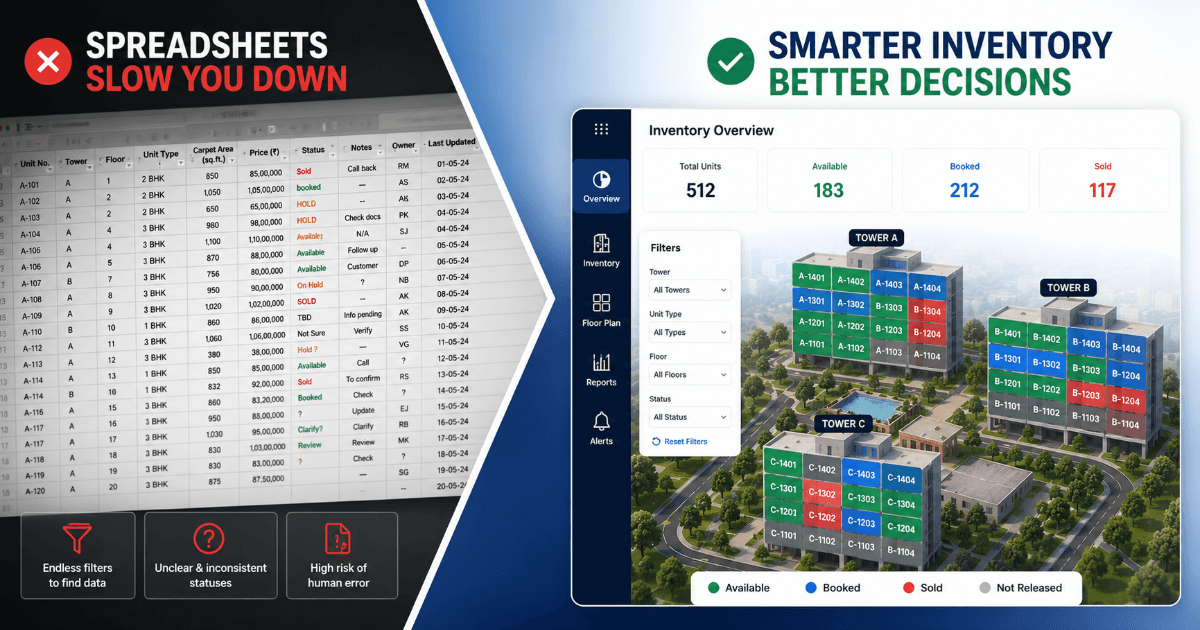
Spreadsheets may store data, but they do not manage inventory well at scale.
Common builder problems include:
- multiple sheet versions circulating across teams
- confusion between sold, blocked, reserved, and available units
- delayed updates between sales and operations
- repeated manual coordination
- poor buyer-facing presentation
A spreadsheet can tell your team a unit is available. But if that update is delayed, duplicated, or shared late, it quickly becomes a sales problem.
What Builders Need Now?
Inventory management is no longer just a back-office task. It directly affects how quickly teams respond, how clearly buyers understand availability, and how professionally a project is presented.
Modern builders need:
- real-time unit status visibility
- clear distinction between available, sold, reserved, and blocked units
- easier coordination across teams
- a better way to present inventory to buyers
- mobile-friendly and website-ready access
This is why many builders are moving beyond static sheets and adopting live inventory systems.
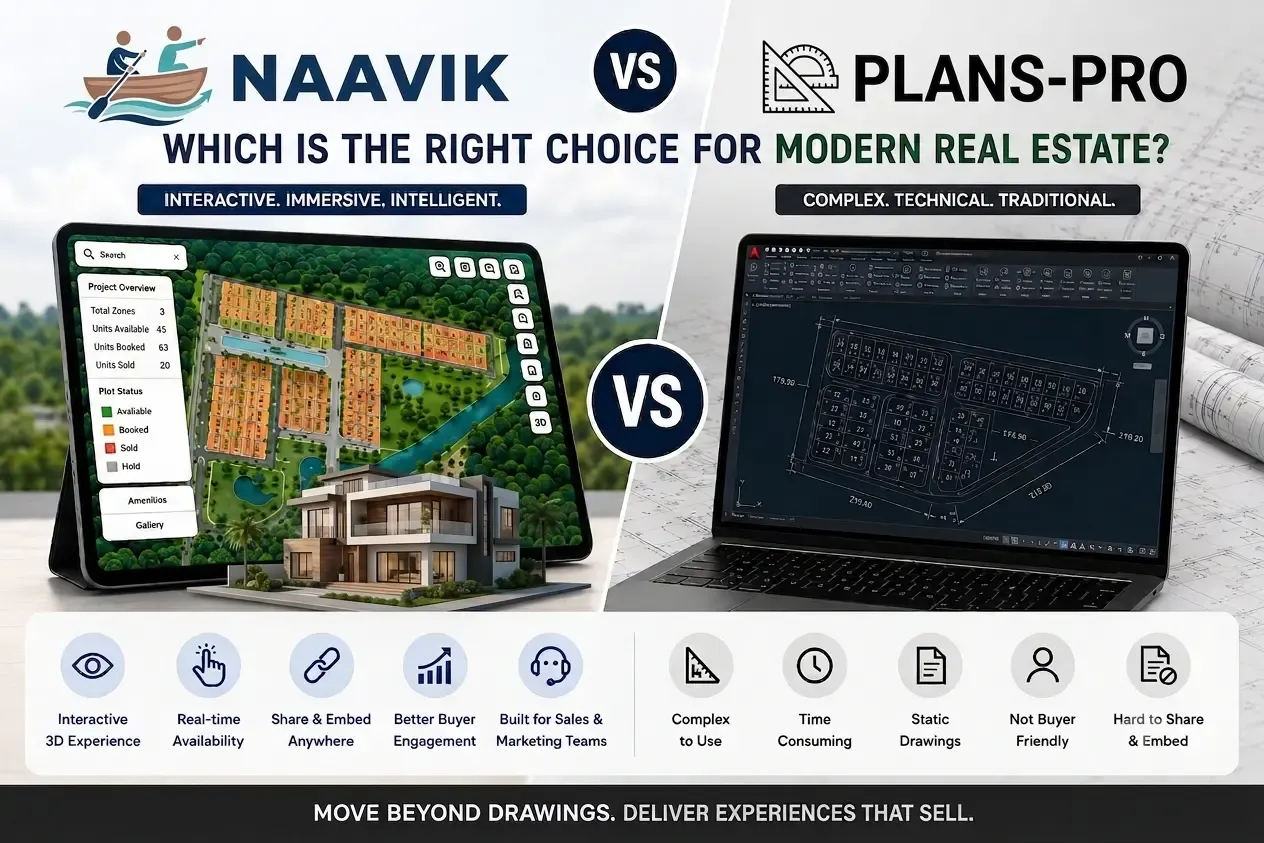
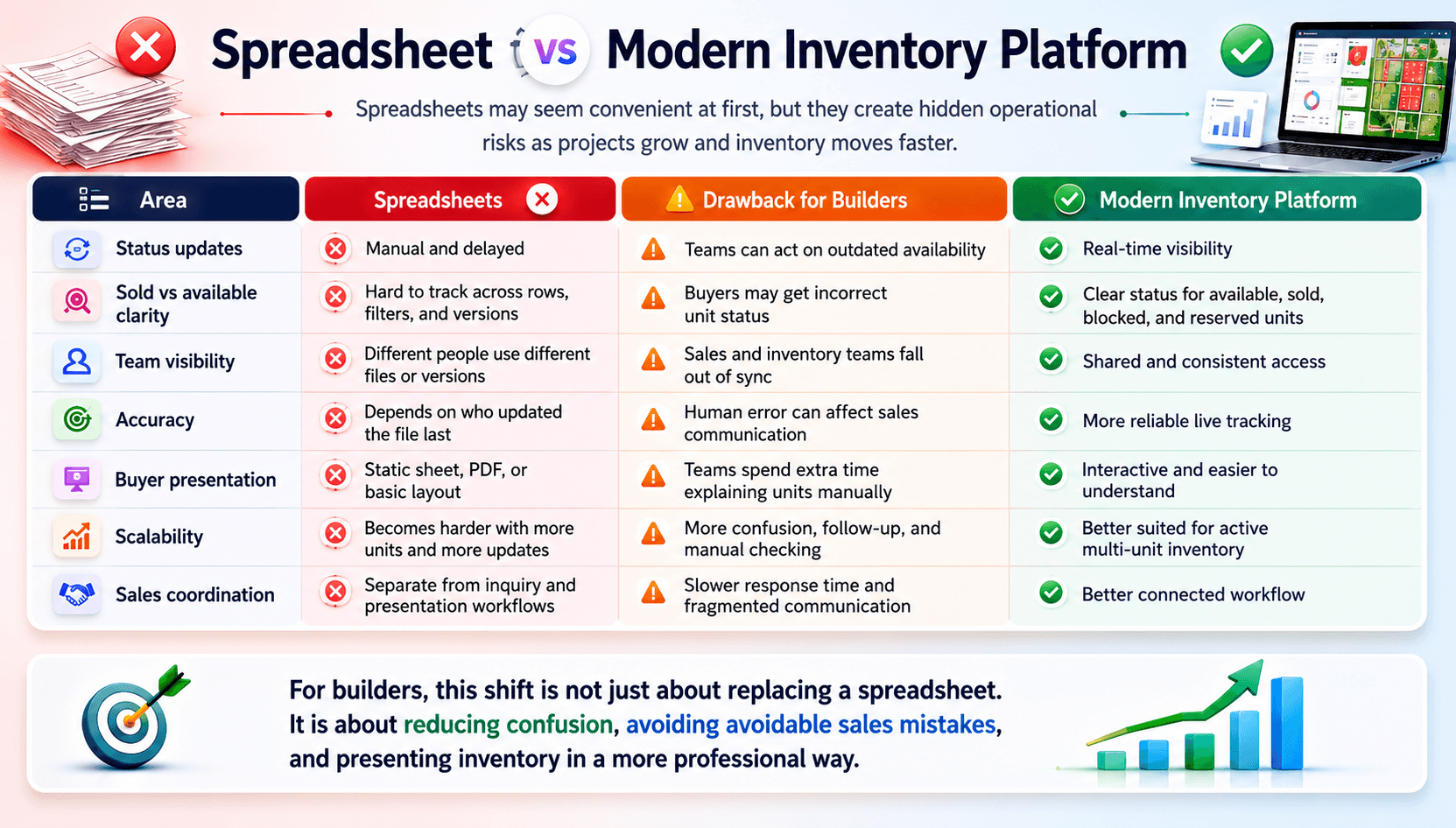
Spreadsheet vs Modern Inventory Platform
Why This Matters for Builders?
When inventory is easier to manage, the entire project workflow becomes smoother.
Teams can:
- respond faster to buyer questions
- reduce internal confusion
- avoid mistakes in availability communication
- present projects more clearly
- create a more premium buying experience
This matters even more in plot, villa, apartment, and township projects where location, layout, and unit-level visibility influence buying decisions.
How Naavik.ai Helps Builders Move Beyond Spreadsheets
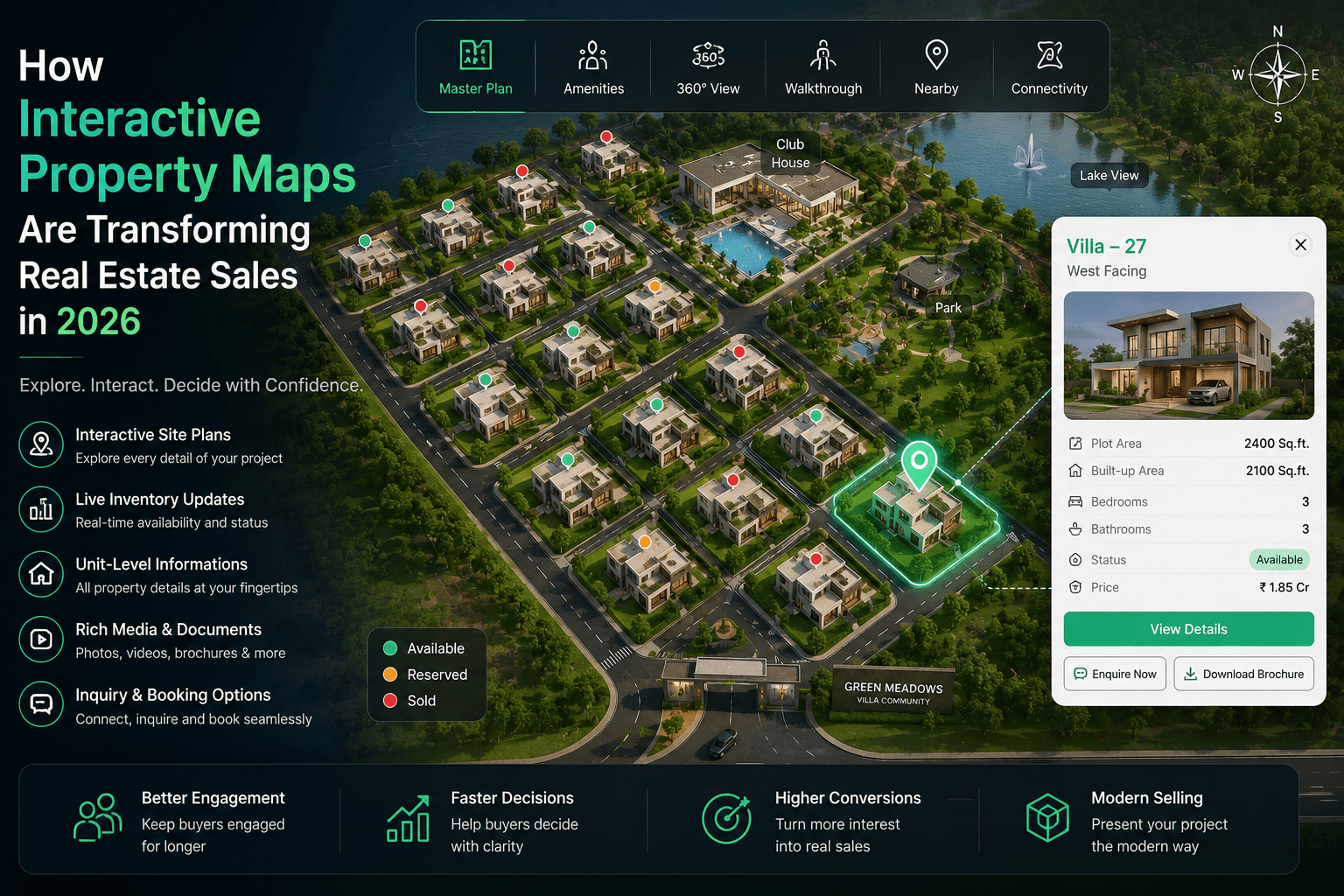
Naavik.ai is not just a spreadsheet replacement. It is an interactive property experience platform that combines inventory visibility with modern project presentation.
With Naavik.ai, builders can:
- show live inventory through interactive property maps
- make units clickable and easier to explore
- display available, sold, blocked, and reserved units clearly
- improve buyer understanding of exact property locations
- embed interactive project experiences directly on their website
- support inquiry and sales coordination through a more connected workflow
Instead of managing inventory as an isolated internal sheet, builders can turn it into a clearer, more engaging project experience.
5 Signs Your Team Has Outgrown Spreadsheets
- Your sales team keeps checking multiple files before confirming availability.
- Buyers are getting inconsistent updates on unit status.
- Inventory updates depend on one or two people.
- Your project presentation still relies on static layouts or PDFs.
- Your team needs better visibility across sales and inventory.
If these issues sound familiar, your team does not need more spreadsheet discipline. It needs a better inventory workflow.
Conclusion
Builders are moving beyond spreadsheets because inventory management now affects much more than internal tracking. It affects coordination, speed, buyer clarity, and project presentation.
Modern inventory management should be live, visual, and easy to understand.
Naavik.ai helps builders transform static inventory into an interactive digital property experience with clearer visibility and better buyer engagement.
Explore how Naavik.ai turns static inventory into a live interactive project experience.